'Boring' is no longer just your boss’ subjective opinion. It’s the highest price you pay for your marketing. System1 research cited in our latest Masterclass estimates that dull advertising accounts for €189 billion in wasted media spend each year, with brands needing up to 2.6 times higher media spend to match the performance of their competitors’ emotionally resonant creatives.
During the Precis Masterclass 'Rescue your creative ROI', Minna Vainio, Creative Growth Manager at Precis, and Thomas Zoëga Ramsøy, founder and CEO of Neurons, pulled apart the mechanics behind that cost. Minna brought the link between audience research, creative production, and commercial performance. Thomas showed how neuroscience and predictive AI can reveal where attention and emotion rise, fall, or drift towards the wrong element.
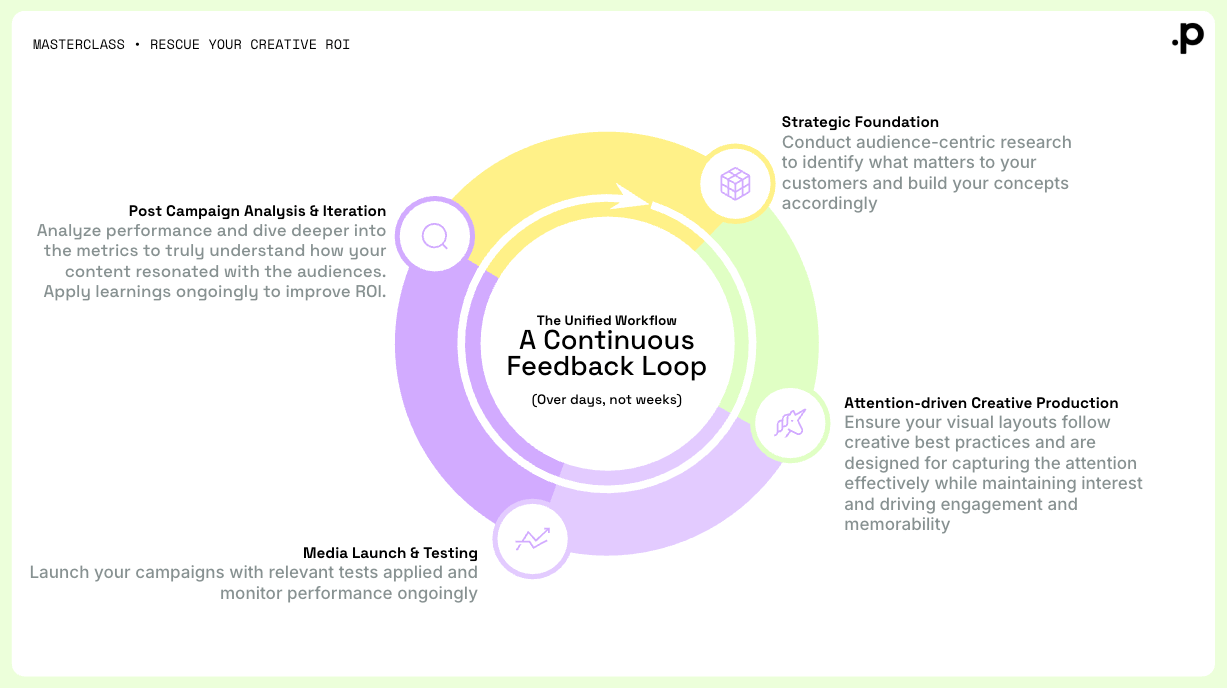
One idea connected the whole session: creative ROI depends on a continuous loop. Start by getting your strategic foundation in order including understanding your audience, design your attention towards attention and emotion and turn your campaign data into the next brief.
You can imagine a wheel like this:
Boring ads get avoided
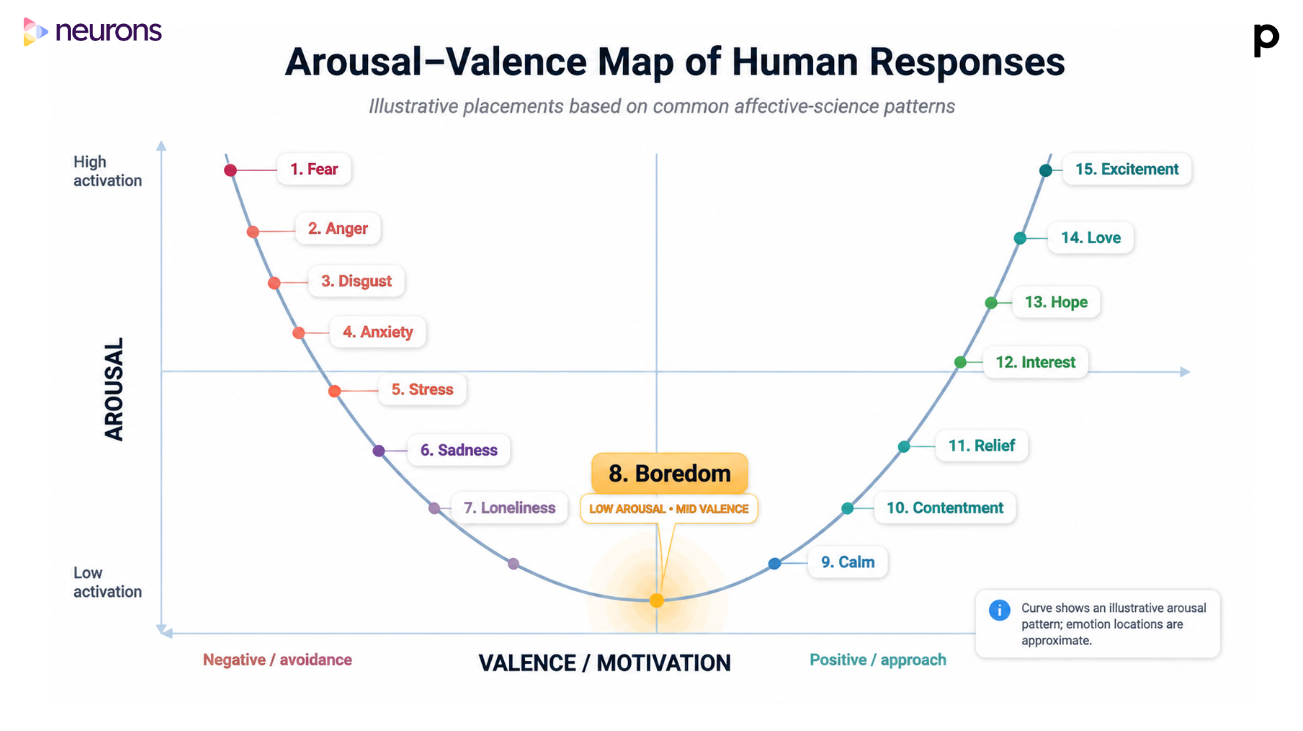
Boredom has a behavioural signature. Thomas described it as low arousal combined with little positive or negative emotional response. The brain treats the ad as background noise, and the thumb moves on.
The live comparison between two ads for the same ergonomic mouse made the point neatly. One version explained that people should use the right tool. The other used humour to show the evolution from an actual mouse to an ergonomic one. The audience picked the instructional version as more boring, and the humorous 'Mouse Evolution' creative had also performed best across the four approaches tested.
The practical lesson is simple: an emotional choice belongs in the brief. Humour happened to fit this product and audience. Another category may need reassurance, aspiration, surprise, or a sense of belonging. The useful question is which feeling helps this specific audience move closer to the brand.
Useful attention lands on the product, brand, or action
Attention can be automatic, goal-directed, emotional, or driven by recognition. Thomas described these as bottom-up, top-down, emotional, and cognitive attention. Movement and contrast can pull the eye automatically. A strong brand or clear task can make someone search actively. A familiar face can create emotional relevance, while existing brand associations help people recognise meaning quickly.
Each route carries a trade-off. High contrast can become distracting. A celebrity can absorb the attention intended for the product. Familiarity can make decoding easier while leaving a weaker brand with little memory to draw on. The commercial question concerns direction: what did the person notice, and did that attention help them understand the offer?
Thomas shared one particularly unforgiving detail. The bottom-right corner of an ad is seen by fewer than 4% of viewers, yet around half of ads place branding or product information there. He calls it the 'corner of death'. A logo technically present in the layout can still contribute very little to memory.
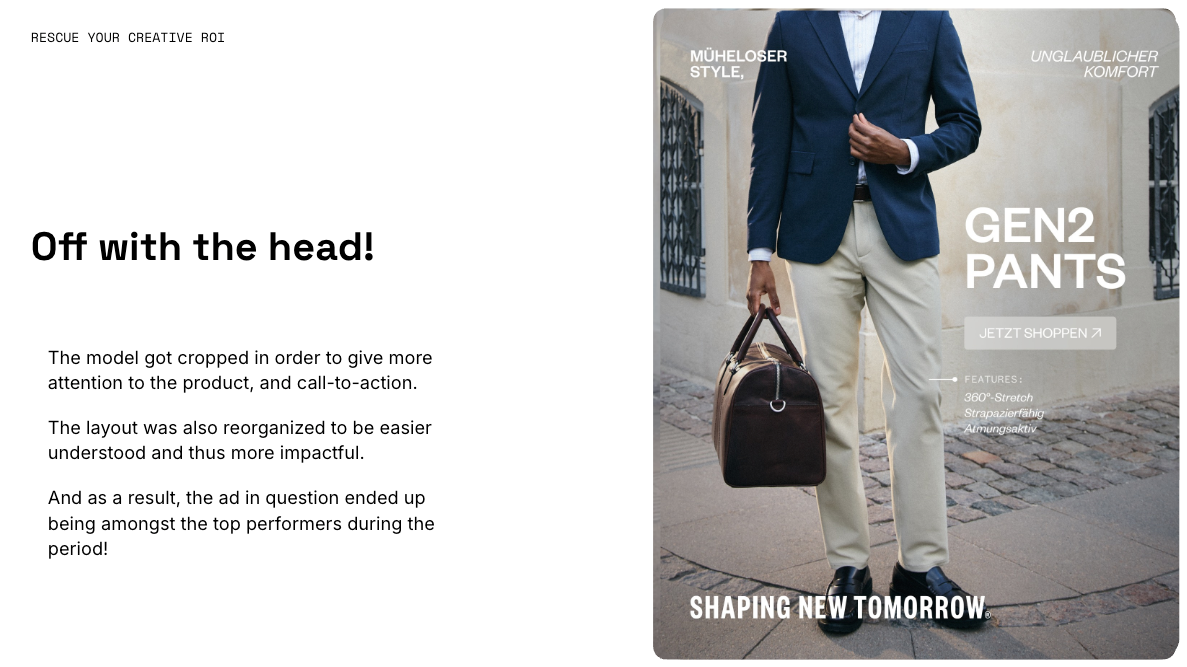
The Shaping New Tomorrow example turned that principle into something tangible. In the first layout, the model looked away from the product, and viewers were likely to follow his gaze.
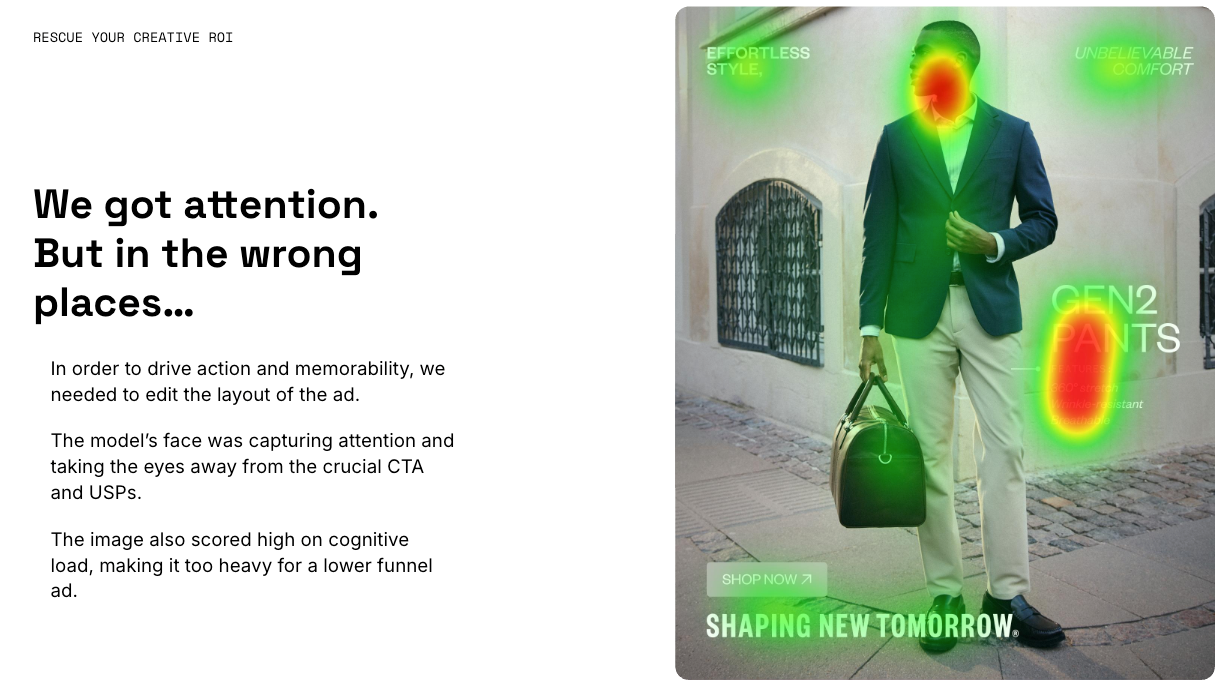
The team cropped out the model's head, gave the clothing more space, and redesigned the call to action and product messages. The revised asset became one of the campaign's top performers. It is the rare marketing case where 'cut off the head' becomes a sensible optimisation recommendation.
Strong creative strategy starts before the design file opens
A big part of that creative strategy is understanding your audience. Oftentimes, these are reduced to segments such as “families with children”, when in fact that says very little about what the segment is interested in. Minna's approach goes further by looking at what people aspire to, what reassures them when they are ready to buy, and which tensions shape their decisions.
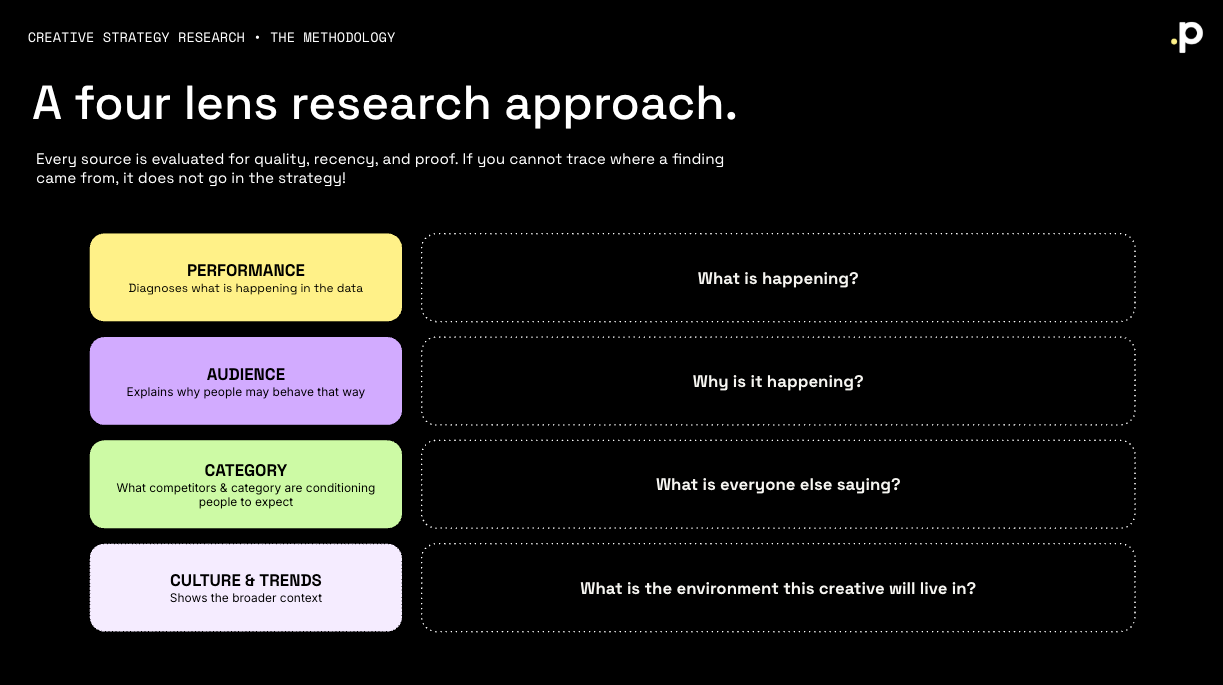
She recommended researching through four lenses: existing creative performance, audience motivations, the wider category, and culture. Together, those inputs help a team move from surface demographics to a clearer view of identity, utility, emotional needs, and proof. Even neighbouring markets can react differently to humour, as Minna has seen in work comparing Finland and Sweden.
This also changes the relationship between discovery and purchase. Aspirational cues such as identity, aesthetics, and lifestyle can make a brand feel relevant early on. Closer to purchase, people often seek reassurance, practical benefit, and evidence that the price makes sense. A creative system needs room for both modes across the wider mix.
The logic scales to teams with leaner research budgets. Begin with the evidence already available across past creative performance, audience research, category review, and cultural context. The output should be a deliberate emotional foundation that gives designers and copywriters a sharper starting point.
Predictive AI gives creative teams an earlier diagnostic
Traditional neuroscience methods can use EEG, pupil dilation, and heart-rate variability to measure response. Thomas showed how neuroscience-based AI can map emotional response across an ad as a timeline, highlighting the exact moments where interest peaks or drops.
That diagnostic can inform practical edits before media spend begins. A team can identify clutter, test whether the brand appears during a high-response moment, or choose which scenes to retain when reducing a 60-second film to 30 seconds. During the session, Thomas demonstrated how an ad could be decluttered and refocused in around ten minutes using this kind of feedback.
The useful role for AI here is specific: it gives creative teams earlier evidence and a shared object for discussion. Human judgement still carries the strategy, cultural meaning, brand standards, and commercial context. Predictive signals create a stronger starting hypothesis, while campaign performance shows how that hypothesis behaved in market.
This earlier feedback also changes revision. A weak assumption costs less to address while the work is still in development. Once production and media are committed, the same lesson arrives with a larger invoice.
Post-campaign analysis should write the next creative brief
Reporting describes what happened, while analysis explains why it may have happened, and from that you can derive what the team should test next. Minna argued that in order to improve your ROI, your creative process requires both approaches to guide the creative optimization process.
Her example compared a studio-shot ad with a lifestyle-led alternative. The studio asset looked more efficient when the two individual ads were viewed side by side. However, across the wider group of campaign assets, lifestyle and creator-style imagery performed better. The isolated winner told one story; the broader pattern gave the team a more useful creative hypothesis.
A practical data cycle therefore moves from observation to insight, then to a rule worth testing. Proxy metrics such as click-through rate and interaction help explain audience behaviour. Business metrics such as sales, acquisition cost, and return on investment show whether that behaviour created commercial value. Reading them together connects creative choices to business outcomes.
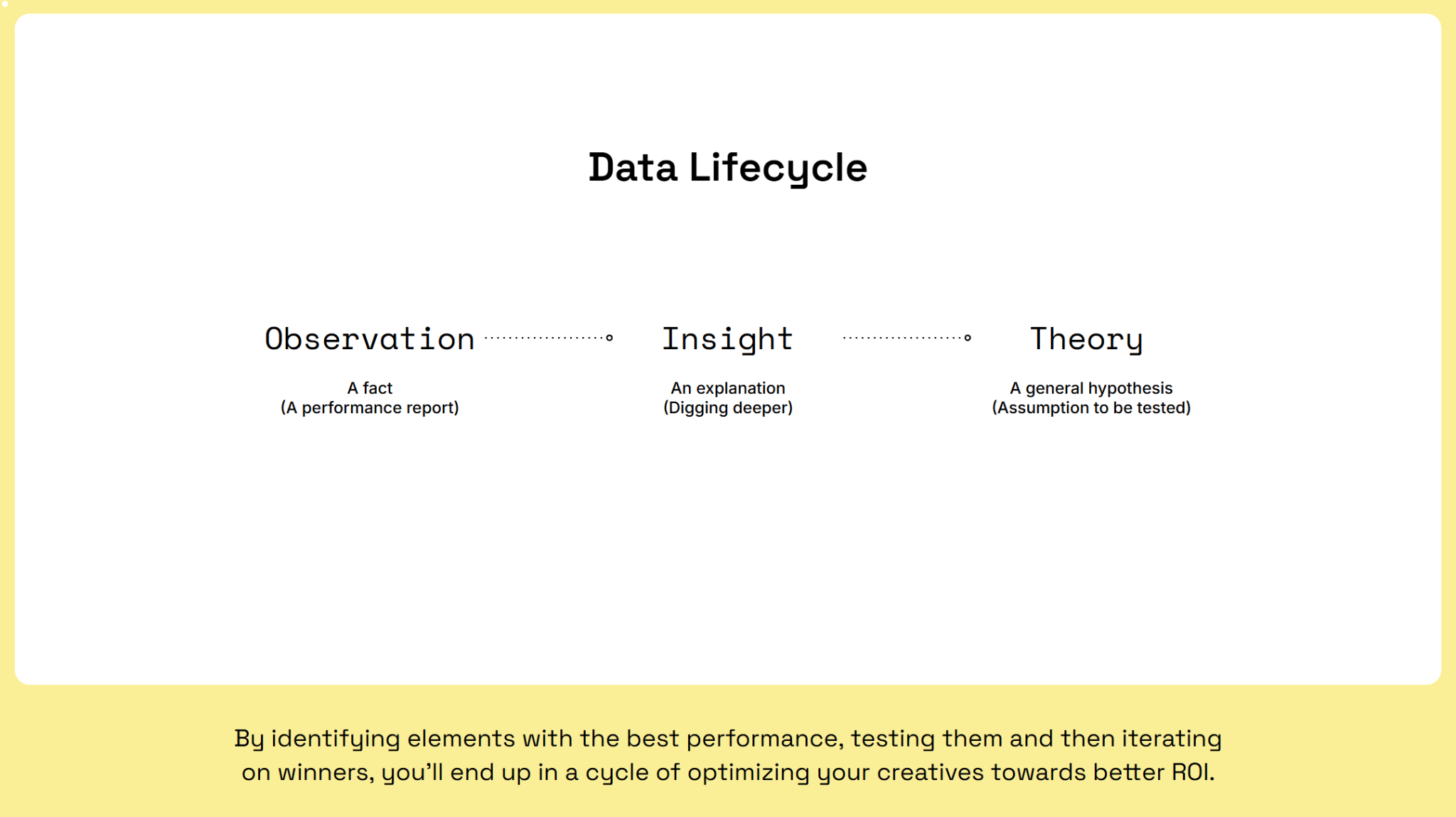
The loop closes when those findings change the next strategy, concept, or layout. Creative reporting becomes commercially useful at the moment it influences what the team makes next.
Three actions to take into your next creative cycle
- Define the emotional response before production begins, and connect it to a real audience motivation. Audit the first 0.7 seconds for fast decoding: product, brand, message, and action need a clear visual hierarchy.
- Check where attention travels and design your layouts for visual hierarchy. Faces, movement, contrast, and familiar cues should guide the eye towards the commercial point.
- Review patterns across groups of creatives alongside individual winners, so one unusually strong asset does not become a universal rule. End every campaign review with a testable hypothesis and one concrete change to the next brief.
Creative ROI improves when the handovers improve
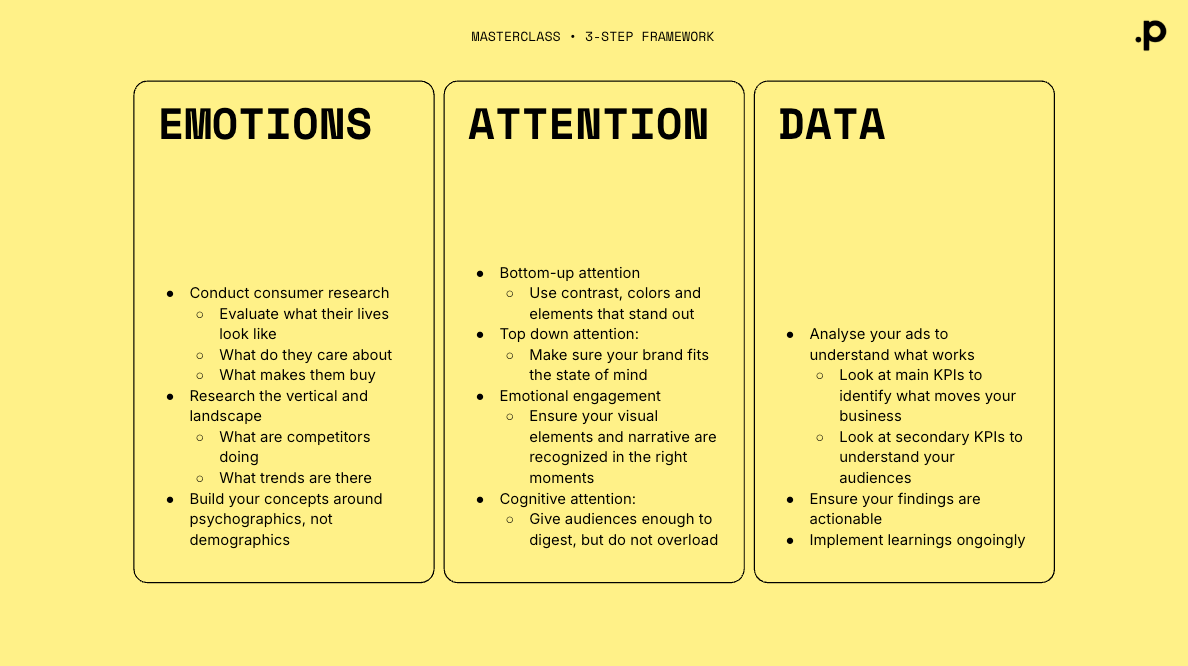
Creative ROI is built at the handovers between audience insight, strategy, design, media, and analysis. The model shared by Precis and Neurons gives those handovers a common language: emotion, attention, and evidence, repeated as one learning loop.
Exclusive Q&A with Thomas and Minna
To hear about the next Precis Masterclass and receive more practical marketing research, sign up to the Precis newsletter.