.avif)
TL;DR
- ChatGPT's product carousels don't run on a mysterious independent AI index — they pull directly from Google Shopping's top 40 organic results and apply their own re-ranking on top.
- If your products aren't in that top 40, they don't exist in ChatGPT's recommendations.
- ChatGPT only looks at organic results, never paid ads — so appearing in its carousels costs nothing beyond feed optimisation.
- If you already have a Google Merchant Center feed, you're roughly 80% of the way there.
Here's everything we covered in our second Precis Masterclass, with Peec AI's Malte Landwehr and Precis SEO & AEO Director Kristina Bergwall.
Why does ChatGPT Shopping matter for e-commerce brands?
It's a fair question. But the numbers make a strong case.
OpenAI officially reports 159 million monthly active search users in the EU alone... more than the combined populations of Sweden, Germany and Italy. And ChatGPT isn't just one option in a crowded market: it holds 76% of the EU AI chatbot market share (Statcounter, May 2026), with Google Gemini at 8.7% and Microsoft Copilot at 5.7%. For now, optimising for ChatGPT is effectively optimising for AI search in Europe.
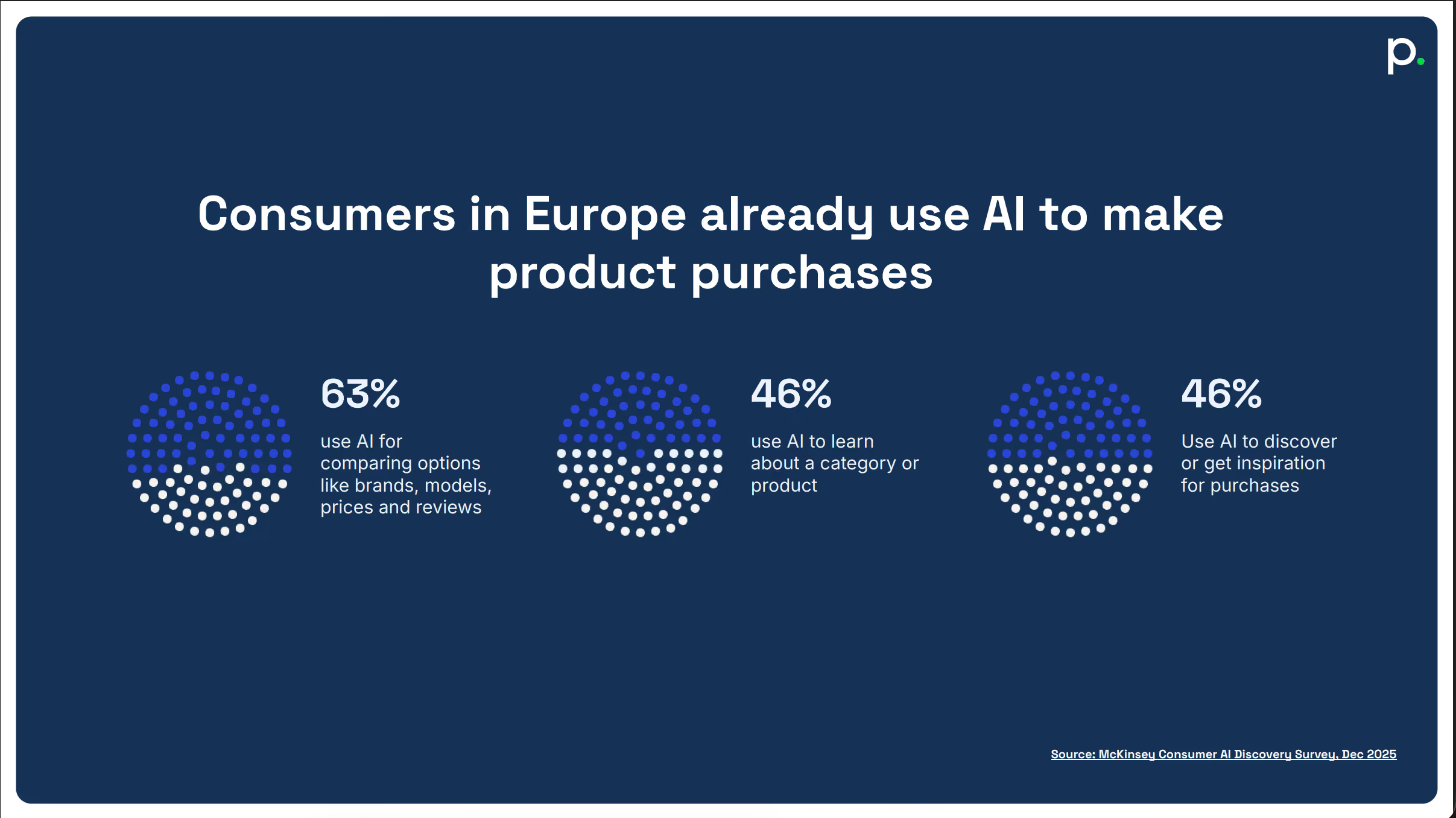
What those users are doing inside ChatGPT matters just as much. According to McKinsey's Consumer AI Discovery Survey (December, 2025), 63% of European consumers already use AI to compare brands, models, prices and reviews. 46% use it to learn about a category or product. Another 46% use it to discover or get inspiration for purchases. These aren't early adopters experimenting with a new tool: this is mainstream consumer behaviour, happening now.
And product carousels show up more often than you might expect. For apparel and fashion, they're triggered 62% of the time. For other physical products, 56%. Even for groceries and consumer goods, it's over 30%. When you run the numbers (159 million users, 46% using AI to research products, a conservative estimate of 3 product-related searches per month, and a 62% carousel trigger rate for fashion), you get approximately 136 million potential product carousels shown to European consumers every month.
That's a whole channel, not a niche feature.
What is ChatGPT Shopping, and where does it get its product data from?
Here's what Peec AI's research uncovered, and it's more straightforward than almost anyone in the industry expected.
When a user asks ChatGPT something that triggers a product carousel (ie: "best running shoes under €150," "what espresso machine should I buy"), ChatGPT doesn't search its own product database. It fires off what Peec AI calls shopping fanout queries: short, product-focused search queries sent directly to Google Shopping's organic results. The products that come back from those queries are what populate the carousel.
The proof is in ChatGPT's own source code. Peec AI researchers found a hidden encoded field in the page, and when decoded, it revealed unmistakable Google Shopping parameters: product IDs, catalogue IDs, offer document IDs, locale parameters, and the exact query used to retrieve the product. They were then able to reconstruct a working Google Shopping URL from those parameters — and it matched the product in the carousel exactly.
Malte Landwehr tested this personally. His wife launched a food brand selling sugar-free cookies. One day after connecting the product to Google Merchant Center, it appeared in ChatGPT Shopping with the same prices, availability data and merchant links pulled straight from the feed. Without a partnership with OpenAI. Without separate integration. All based on a Google Merchant Center feed.
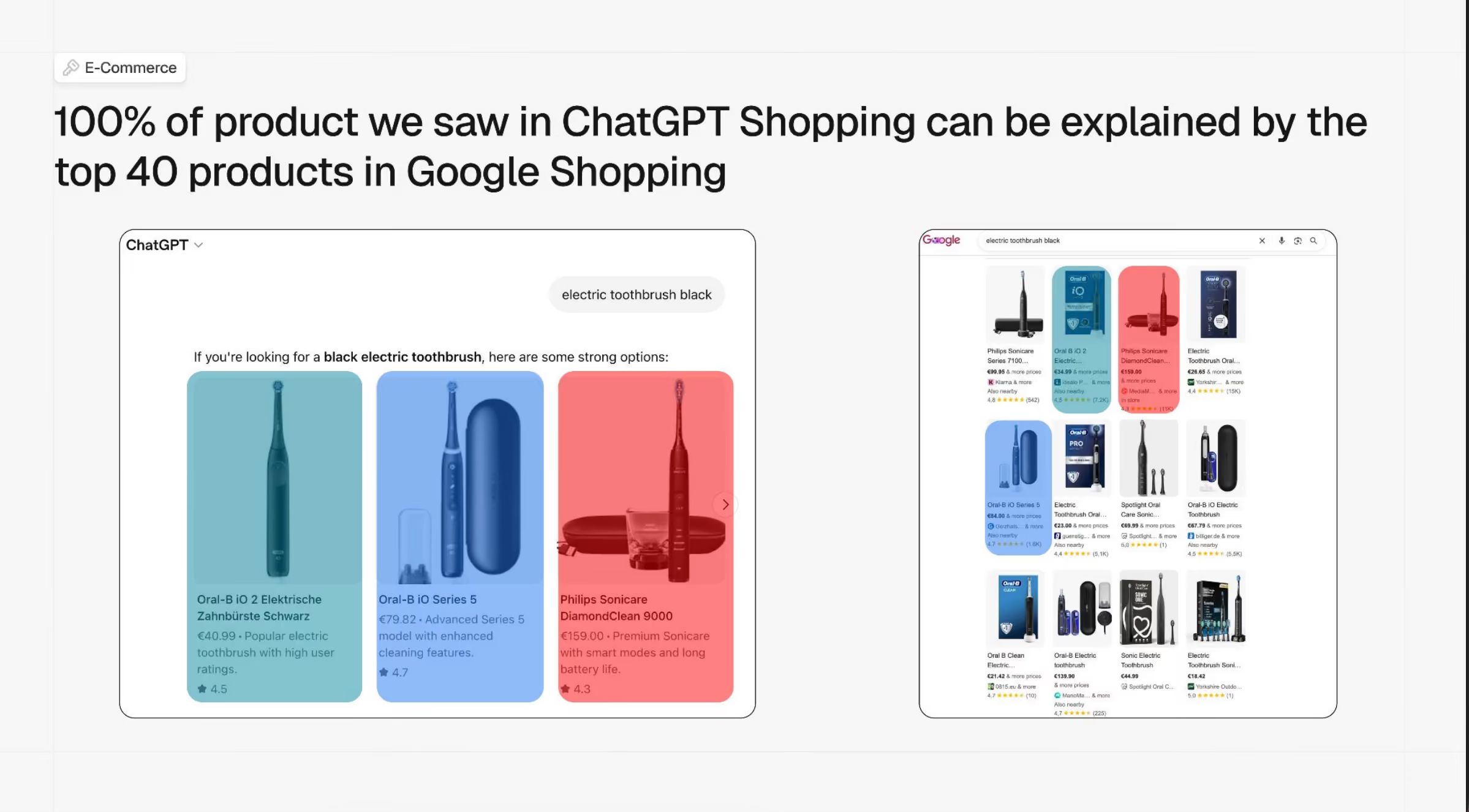
The scale of the research confirms what the anecdote suggests. Peec AI analysed over one million shopping fanout queries, compared against Google Shopping results across many industries and markets. The conclusion: 100% of products seen in ChatGPT Shopping can be explained by the top 40 organic products in Google Shopping for the corresponding query. Bing Shopping, by contrast, explains only 11%... and almost none of those exclusively. If it's in ChatGPT's carousel, it came from Google.
Does ChatGPT Shopping use paid Google Ads, or only organic results?
This is worth pausing on, because it changes the commercial logic significantly.
ChatGPT looks at organic Google Shopping results only. Paid ads are completely ignored. That means appearing in ChatGPT's product carousels costs nothing beyond the work of having a well-optimised Google Merchant Center feed. No platform fees, no sponsored placements, no new budget line. It's a free, high-converting channel that most e-commerce brands are already most of the way equipped to access.
The conversion rate data reinforces why this matters. According to Adobe for Business (March, 2026), LLM traffic converts 42% higher than non-AI traffic. The reason is intuitive: someone asking ChatGPT for a specific product recommendation isn't browsing — they're in a high-intent purchase mindset, looking for a definitive answer. When your product shows up in that moment, the path to conversion is short.
How does ChatGPT decide which products to show, and in what order?
It's not a straight copy of Google Shopping rankings. ChatGPT applies its own re-ranking on top of what Google returns, which is where the real opportunity (and nuance) sits. A few things Peec AI's research reveals about how that re-ranking works:
Position matters, but it's not everything
The average difference between a product's Google Shopping position and its ChatGPT carousel position is about five places. Products get reshuffled. That means ranking first in Google Shopping doesn't guarantee appearing first in ChatGPT, and ranking fifth doesn't rule you out of the top carousel slot.
Product attributes signal relevance
When ChatGPT generates a comparison table, it rates products on attributes like comfort, durability, versatility, or price range. These attributes aren't random — they reflect what ChatGPT considers the most important dimensions of that product category. If your product description doesn't use those words in a positive, evidence-backed way, you're at a disadvantage in the re-ranking process.
Star ratings act as a filter
Products with fewer than three stars on the attributes ChatGPT evaluates are effectively invisible in the carousel. Proving product quality in your feed and on your product pages isn't just good practice — it's a threshold requirement.
Shopping fanout queries introduce new terms
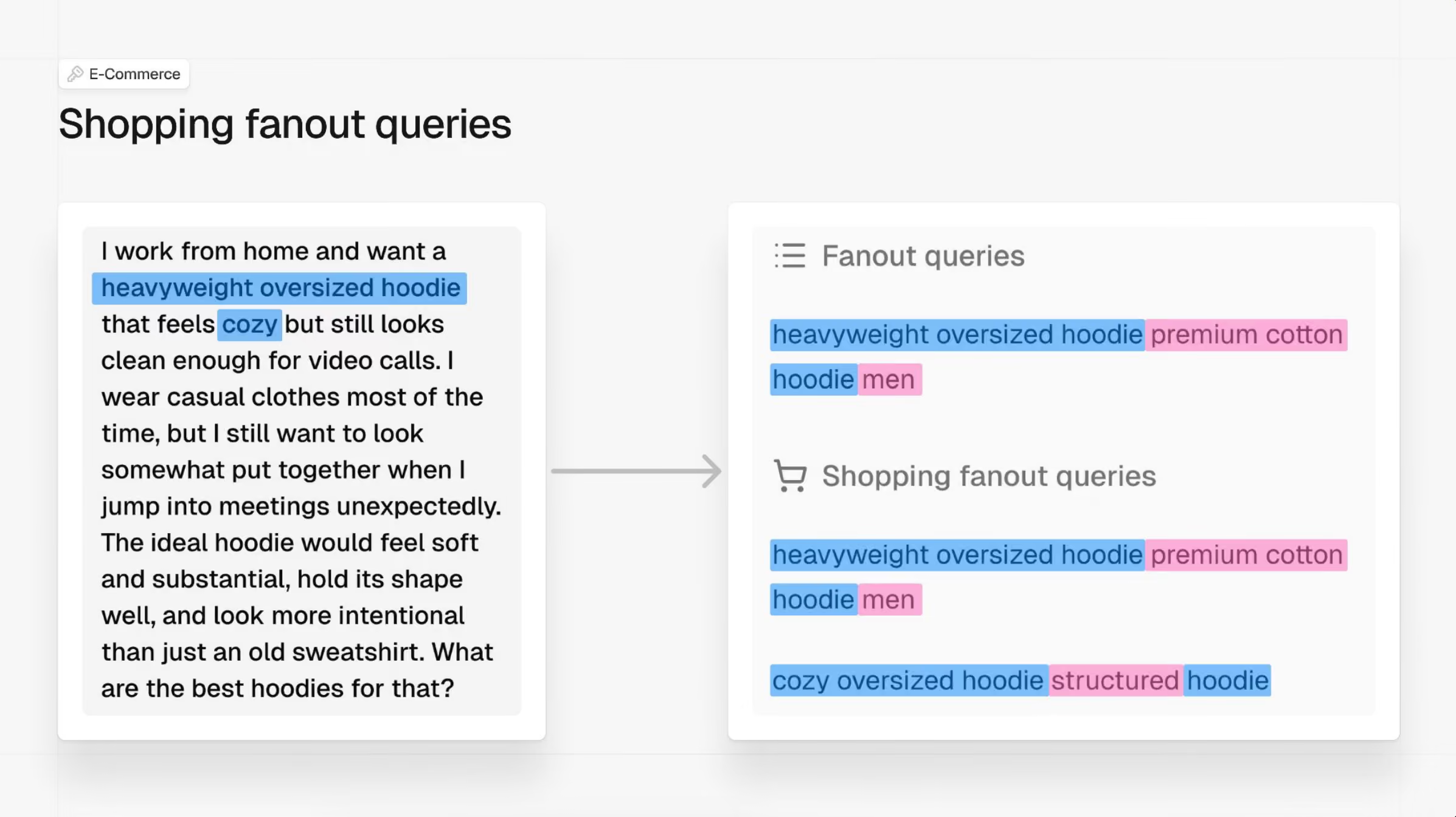
This is one of the most actionable findings in the research. ChatGPT's shopping fanout queries often include words that weren't in the user's original prompt. In Malte's example, a user asked for a "cozy, heavyweight, oversized hoodie" — and the fanout query added "premium cotton," "structured," and "men." If those terms don't appear on your product detail page or in your feed, your product is less likely to be retrieved in the first place.
The top terms ChatGPT adds to fanout queries across e-commerce include: "best", "review(s)", "2026", "top", "comparison", and "vs". These aren't just keywords — they're a direct signal of the content types that should exist around your products.
Does ChatGPT recommend the same products globally, or does it vary by country?
One finding that senior marketers operating across multiple European markets should note: ChatGPT's product recommendations are not uniformly global or local — they vary significantly by category.
For skincare, the same three brands appear consistently across the US, Mexico, Germany, Austria, Switzerland, Spain, Sweden and the UK. A globally strong brand presence in a category with established consensus translates directly into consistent AI visibility across markets.
For wedding outfits, the picture is almost entirely different by country. ASOS dominates across several European markets. Bubbleroom and NA-KD appear in Sweden. Lulus and Nordstrom appear in the US. The brands ChatGPT recommends reflect the local Google Shopping results for each market.
The implication for marketers: in commoditised or consensus-driven categories, global brand authority matters more. In fashion, occasion wear, and other culturally specific categories, local market presence and local feed optimisation are what determine visibility.
What should e-commerce brands do about it?
At Precis, we've introduced a three-level framework for translating the research into action. We'll cover this in full in a dedicated post, but here's the shape of it.
Level 1: Feed fundamentals
The foundation is getting your Google Merchant Center feed in order: ingested correctly, audited for health, and checked for Agentic Commerce Protocol (ACP) readiness. The goal at this level is 100% indexing efficiency and zero data friction. If your products aren't clean and complete in the feed, nothing else works.
Level 2: Feed conflict and AI enrichment
Most brands have one shopping feed, optimised for paid performance: short, punchy, ROI-focused. But the organic feed that powers AI visibility needs to do something different: it should be long-tail, attribute-rich, and context-focused. Separating these two and enriching the organic feed with AI-powered attribute expansion (including image-based feature detection) is where most brands have the biggest gap and the biggest opportunity.
Level 3: Conversational domination
Your feed gets you into the carousel. What influences the written context around it (the recommendations, the comparisons, the "what to know about these" summaries) is the broader web. That means social SEO (Reddit, TikTok, YouTube conversations about your brand and products), digital PR (authority listicles account for 41% of commercial AI citations), and making sure the language your brand uses online matches the terms ChatGPT introduces in its fanout queries.
LLMs train on the whole web. The brands that win in AI search are the ones that control the entire narrative — not just their feed.
The bottom line
Upgrading your organic feed for AI visibility is essentially a free, high-converting revenue channel that you are already 80% equipped to handle. Our' three-level framework (feed fundamentals, AI feed enrichment, and conversational domination) covers the remaining 20%, starting from wherever you are right now.
👉 Want to understand your current AI visibility and where to start? Get in touch with the Precis team.
Frequently asked questions
Is ChatGPT Shopping based on Google Shopping?
Yes. Peec AI's research found that 100% of products appearing in ChatGPT Shopping could be explained by the top 40 organic results in Google Shopping for the matching query. Bing Shopping only explains around 11% of products, and almost none exclusively.
Does my brand need to pay to appear in ChatGPT Shopping?
No. ChatGPT only retrieves organic Google Shopping results — paid ads are excluded entirely. The only requirement is a well-optimised Google Merchant Center feed.
How quickly can a product appear in ChatGPT Shopping after being added to Google Merchant Center?
Based on Peec AI's own testing, a product appeared in ChatGPT Shopping the day after being connected to Google Merchant Center, with accurate pricing and availability pulled straight from the feed.
Why does my product's ranking in ChatGPT Shopping differ from its ranking in Google Shopping?
ChatGPT applies its own re-ranking on top of Google Shopping's order, typically shifting products by an average of five positions. This re-ranking is influenced by signals like product attributes (comfort, durability, versatility), star ratings, and the language used in product titles and descriptions.
Does ChatGPT recommend the same brands in every country?
It depends on the category. In categories with global consensus, like skincare, the same brands (CeraVe, La Roche-Posay, The Ordinary) appear across most European and North American markets. In more locally driven categories, like wedding outfits, recommendations vary significantly by country, reflecting local Google Shopping results.
What's the three-level framework for ChatGPT Shopping visibility?
Feed fundamentals (getting your Google Merchant Center feed clean and complete), feed enrichment (building an attribute-rich organic supplementary feed to resolve the conflict with your paid feed), and conversational domination (controlling the wider web narrative around your brand through social SEO and digital PR). The full breakdown is in our follow-up post about how to show up in ChatGPT Shopping.
Authors

Stefania Casciari Carter
CMO at Precis
Stefania Casciari Carter
CMO at Precis