
TL;DR
ChatGPT's product carousels are built entirely from Google Shopping's top 40 organic results, re-ranked by an AI layer. To show up, you need three things in place:
- A clean, fully ingested Google Merchant Center feed (Level 1)
- An enriched organic supplementary feed that speaks the language ChatGPT's AI search actually uses (Level 2)
- A strong web presence that shapes how ChatGPT talks about your brand (Level 3)
If you already run Google Shopping for paid, you're roughly 80% of the way there.
What is ChatGPT Shopping, and how does it choose which products to show?
ChatGPT Shopping is the product carousel and comparison table ChatGPT generates when someone asks a shopping-related question. It does not search an independent product index. Instead, when a prompt triggers a shopping intent, ChatGPT generates shopping fanout queries — short, product-focused search queries — and sends them to Google Shopping's organic results. Paid ads are excluded entirely.
Research from Peec AI, based on more than one million shopping fanout queries, found that 100% of products appearing in ChatGPT Shopping could be explained by the top 40 organic results in Google Shopping for the matching query. ChatGPT then applies its own re-ranking on top of Google's order, shifting products by an average of five positions based on signals like product attributes, ratings, and review volume.
In short: your Google Merchant Center feed is your ChatGPT Shopping listing. If your product isn't ranking in Google Shopping's organic top 40, it cannot appear in ChatGPT's recommendations, regardless of how good your paid campaigns are.
This matters commercially because LLM-driven traffic converts around 42% higher than standard non-AI traffic (Adobe for Business, March 2026), and ChatGPT holds 76% of the EU AI chatbot market — making it the single most important AI surface for e-commerce visibility in Europe right now.
The 3-level framework for ChatGPT Shopping optimisation
I presented this framework at our Precis Masterclass, How ChatGPT Shops, alongside Peec AI's research. It's designed to be sequential: each level builds on the one before it, and most brands will find they already have parts of Level 1 in place.
Before diving in, it's worth knowing which of these two profiles you fall into, since it changes what "success" looks like at every level:
- Single-brand retailers (you sell your own products) are optimising for product recommendation dominance — getting your specific items recommended.
- Multi-brand retailers (you sell many brands, like a department store or marketplace) are optimising to be the chosen supplier — winning the sale regardless of which brand ChatGPT recommends.
Level 1: Feed fundamentals
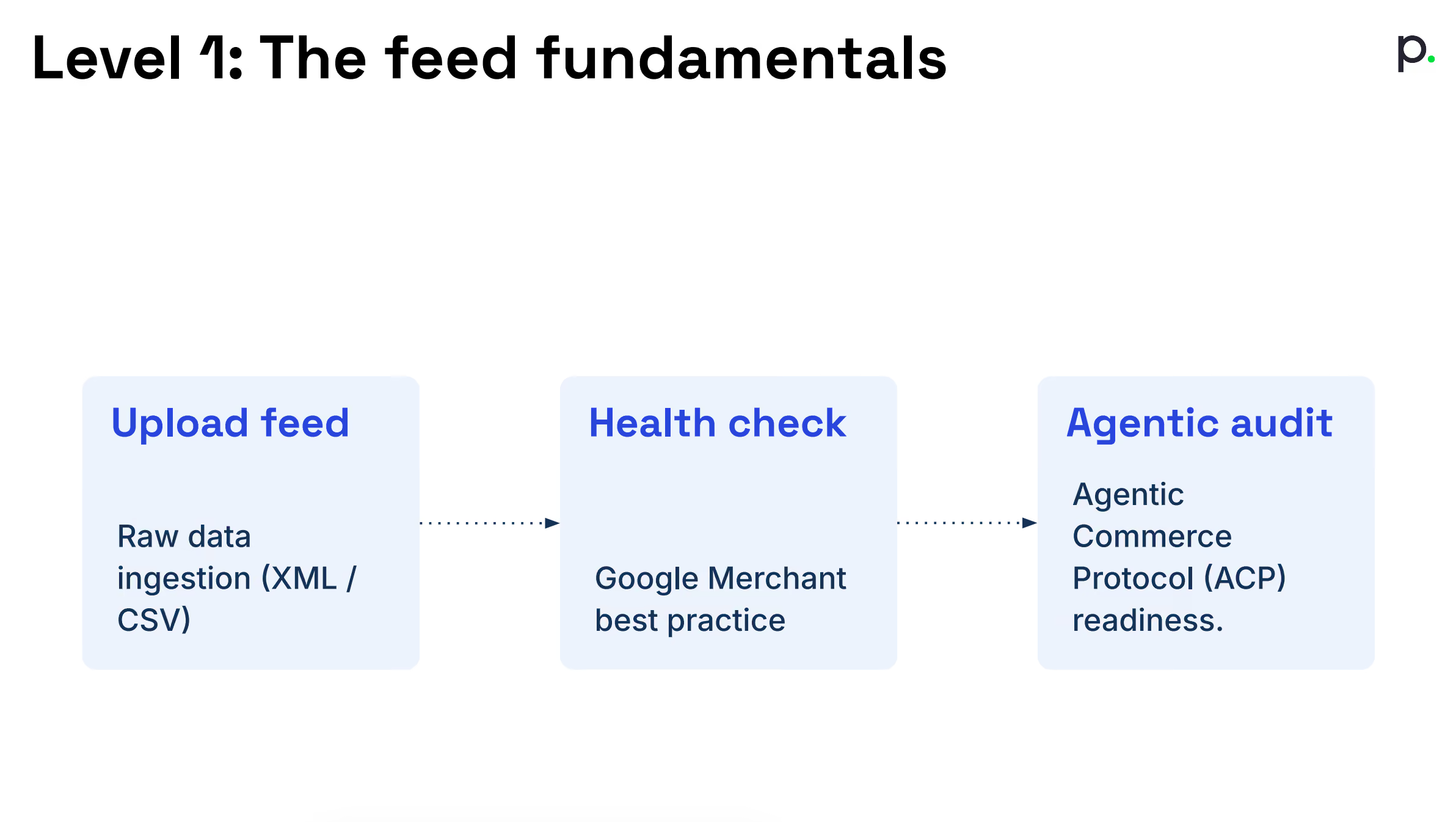
The situation
Before any optimisation is possible, your products need to exist cleanly inside Google Merchant Center. Missing GTINs, incomplete attributes, inconsistent categorisation, and disapproved listings are the most common reasons products are invisible to both Google Shopping and ChatGPT. This is more often neglected than expected, especially for multi-brand retailers managing large catalogues.
What to do
Three things at this level:
- Ingest your full product catalogue into Google Merchant Center in a clean XML or CSV feed. Every product you sell needs to be present — anything missing from the feed is invisible by default.
- Audit the feed against Google Merchant Center's data requirements. Check for disapproved products, missing required fields, and low-quality titles or descriptions. Feed health scanners (including Peec AI's) can automate this.
- Connect your feed with future readiness in mind, including Agentic Commerce Protocol (ACP) compatibility. ACP isn't the dominant standard yet, but early alignment reduces rework as agentic commerce matures.
Why it works
Malte Landwehr of Peec AI tested this directly with his wife's food brand: the product appeared in ChatGPT Shopping the day after being connected to Google Merchant Center, with accurate pricing and availability pulled straight from the feed. The feed is the on-switch. For single-brand retailers, this ensures every product has a chance of being seen. For multi-brand retailers, it ensures you're a viable supplier across your entire catalogue.
Level 2: AI feed enrichment
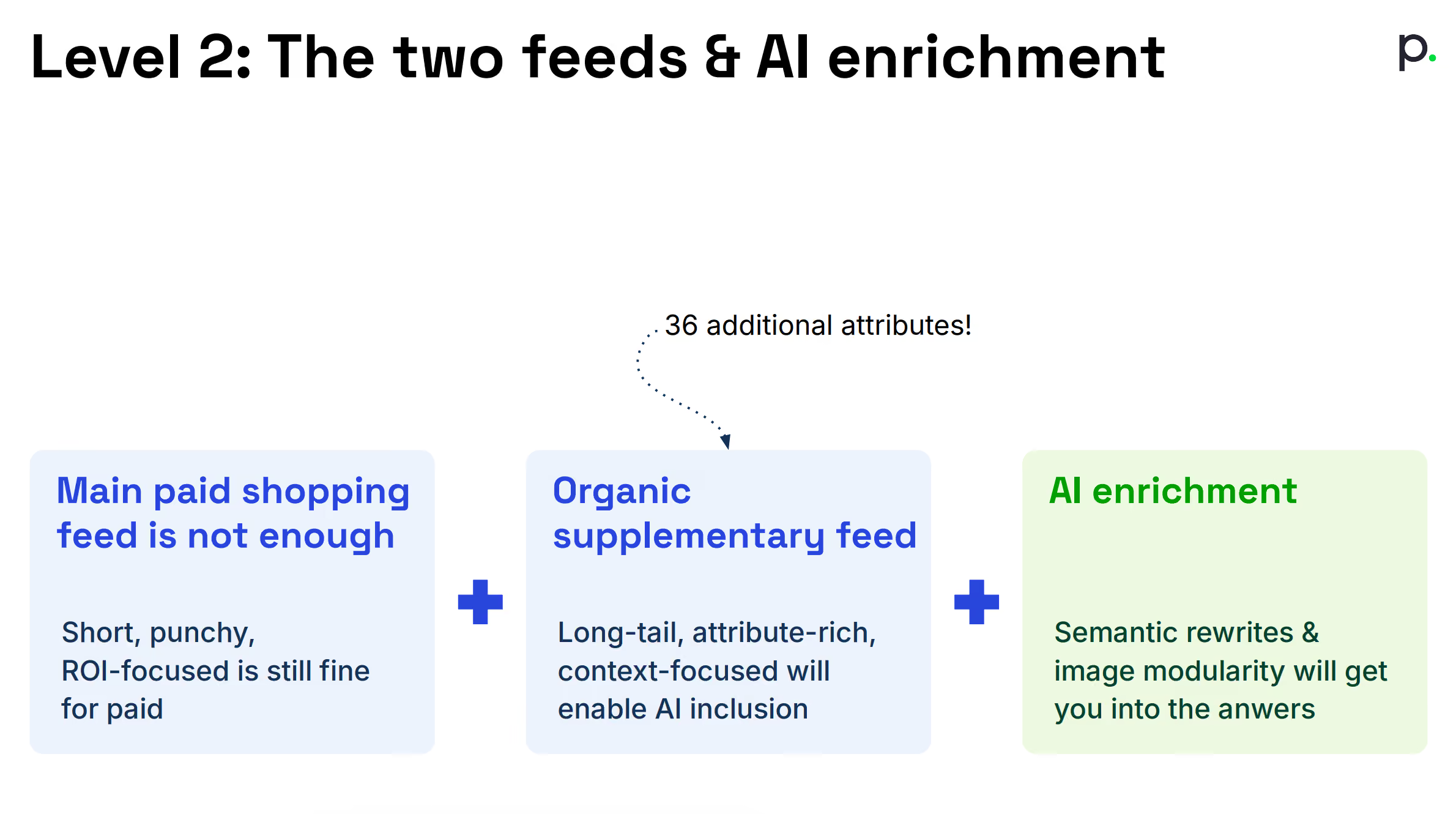
The situation
Most brands run one shopping feed, optimised for paid: short, punchy titles built for high-intent keyword matching. That's the right approach for paid auctions, but ChatGPT's shopping fanout queries are longer and more descriptive, and frequently introduce attribute terms the user never typed. In one example, a user prompt asking for "a heavyweight oversized hoodie that feels cozy" generated a shopping fanout query that added "premium cotton," "structured" and "men" — none of which appeared in the original prompt. A paid-style feed often can't match this language, which means strong paid performance doesn't guarantee AI visibility.
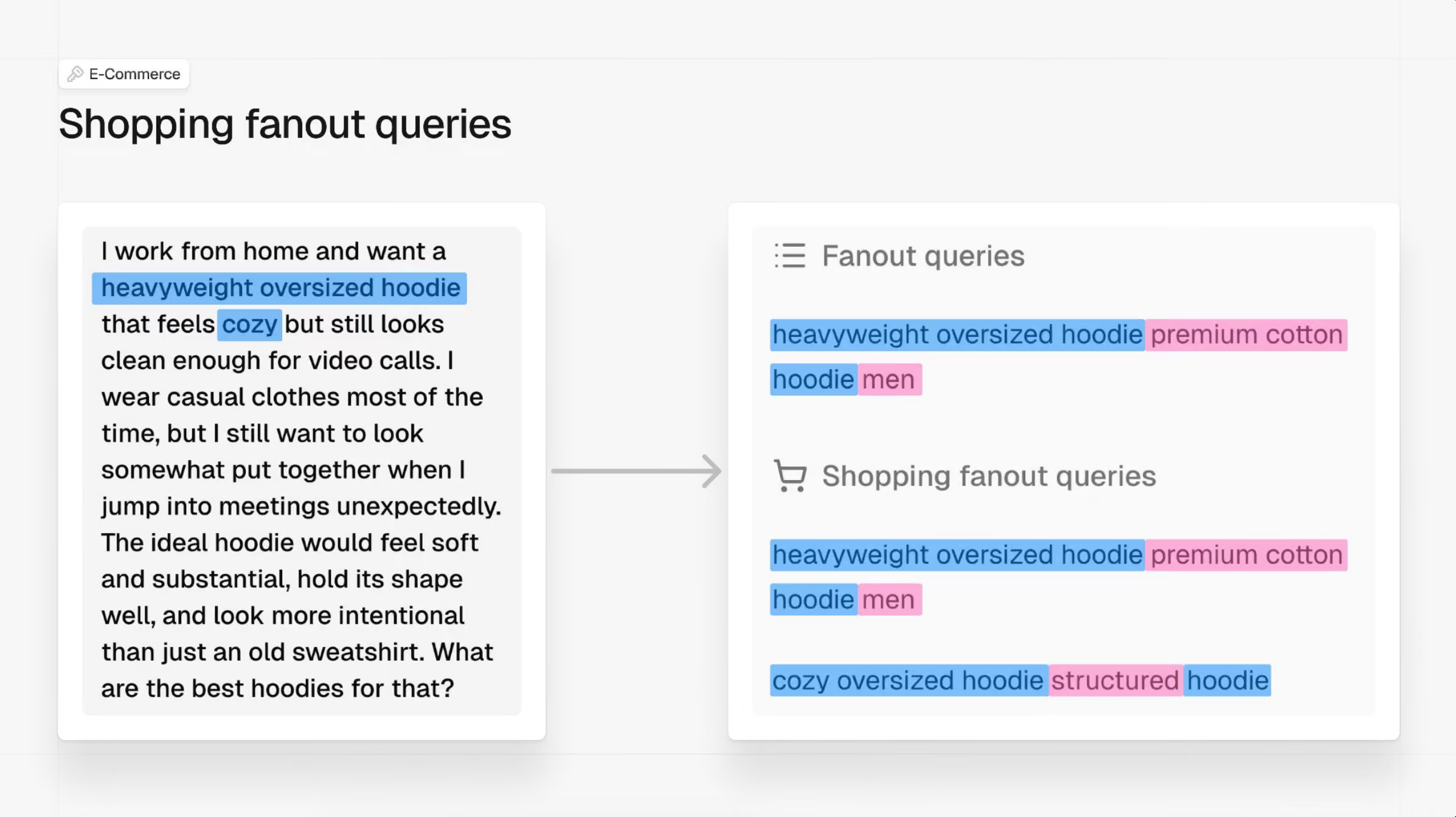
What to do
- Build a separate organic supplementary feed. Google Merchant Center supports a supplementary feed with up to 36 additional attributes, distinct from your paid feed. This is where long-tail, descriptive, attribute-rich content belongs — the nuances and long-tail terms that show up in fanout queries and conversational prompts, which a punchy paid title has no room for.
- Use AI enrichment to scale attribute coverage. Manually enriching thousands of product listings isn't realistic. AI enrichment tools can analyse your existing product data and images to identify and add attributes you're missing, then rewrite titles and descriptions accordingly. Concretely, this means:
- Rewriting product titles to include the attribute language ChatGPT surfaces in comparison tables (comfort, durability, versatility, material quality)
- Adding descriptive terms from shopping fanout queries that your products genuinely match
- Using image analysis to surface product features that aren't captured in your existing data
- Formatting brand, size, material, gender and age attributes into clean, comparable fields, particularly useful for multi-brand retailers managing thousands of SKUs
- Treat ChatGPT's comparison tables as a content brief. The attributes ChatGPT rates products on (comfort, durability, versatility) signal exactly what it considers relevant for that category. If your product pages don't address these attributes with evidence, you're at a disadvantage in the re-ranking process.
One threshold to note: products rated below three stars on ChatGPT's evaluated attributes are typically filtered out of the carousel entirely. Strong ratings aren't optional at this level.
Why it works
For single-brand retailers, a rich organic supplementary feed increases the likelihood that your products are retrieved and ranked well across a wider range of prompts, including the long, conversational queries that characterise how people actually use ChatGPT when shopping.
For multi-brand retailers, enriched product data helps your store surface as the most complete and authoritative source for a given product. This influences both whether ChatGPT recommends it from your store and whether the user chooses you over a competitor when they click through.
Level 3: Conversational domination
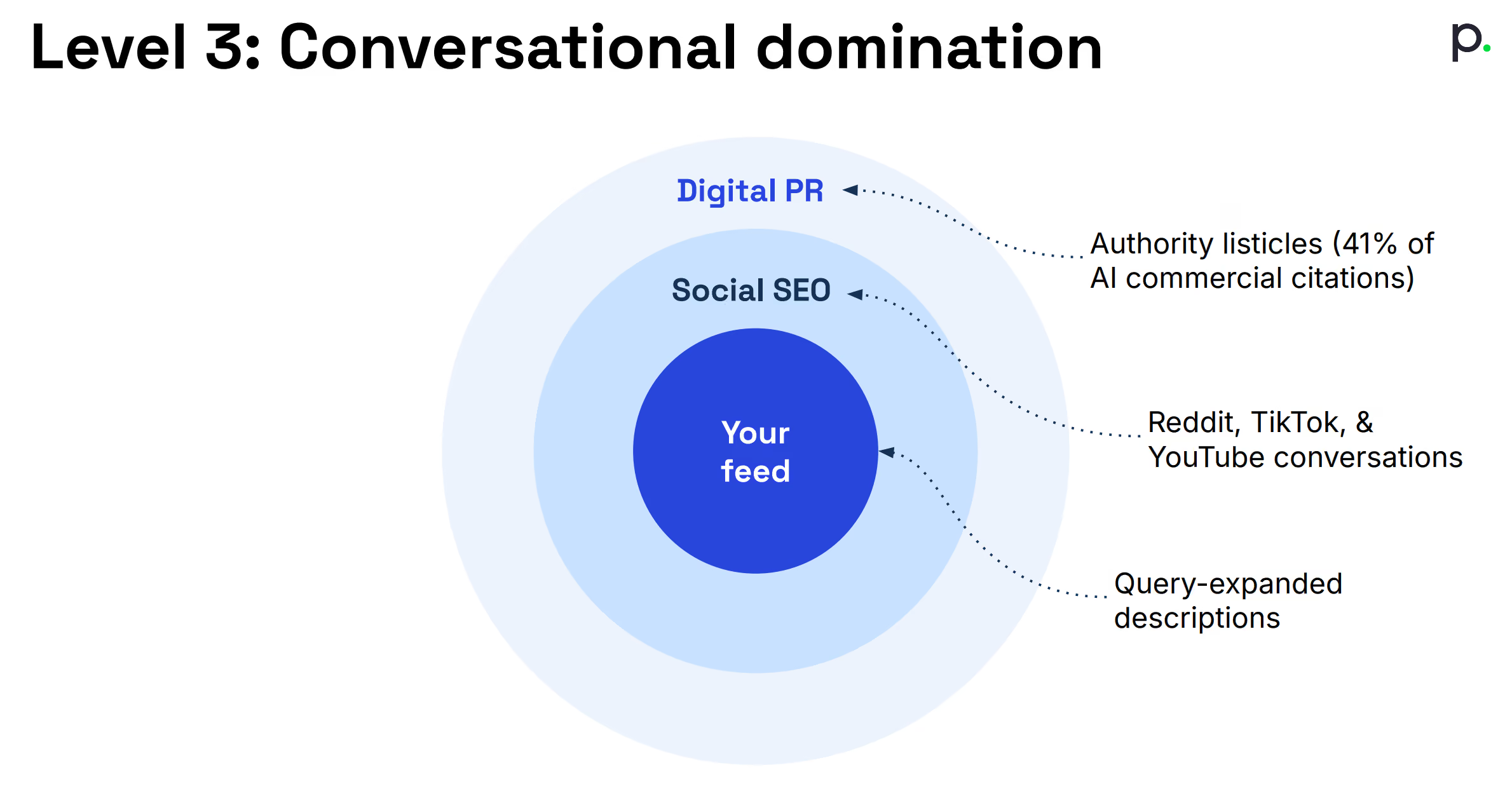
The situation
Your feed gets your products into the carousel. But ChatGPT does something your feed can't fully control: it also generates written context around the products it recommends (summaries, comparisons, "what to know about these" sections) and that context is drawn from the broader web.
ChatGPT trains on the entire open web. The sentiment, the language, the associations it has with your brand or your products reflect everything it has encountered about you online: reviews, articles, social media discussions, Reddit threads, YouTube videos, editorial listicles. Your feed tells ChatGPT what your product is. The web tells ChatGPT what people think of it.
This is where the gap between showing up and winning opens up.
What to do
- Invest in social SEO. When ChatGPT generates an answer, it's drawing on a dataset that is effectively the entire open web. So look at who is actually talking about your brand, what they're saying, and what the sentiment is — that's the input shaping ChatGPT's bias toward or against you. Driving brand mentions, video content, product discussions and reviews across platforms like TikTok and Reddit needs a unified strategy across teams, not a one-off campaign. If you're starting from scratch, invest first in a tool that shows you what's currently being said about your brand and how you compare to competitors, so you know where the gaps actually are before you start producing content.
- Prioritise digital PR and listicles. High-authority listicles make up 41% of commercial-intent AI citations, which makes them an obvious place to start. Single-brand retailers should also make sure their own optimised product and category pages are in good shape, and actively manage "[product] review" search results. Multi-brand retailers should focus on category-level authority instead. That said, don't put all your eggs in the listicle basket: like any SEO tactic, what works well today will work less well over time, so this needs to sit inside a broader, ongoing content strategy rather than a single push.
- Create query-expanded content. The most common terms ChatGPT adds to fanout queries include "review," "best," "comparison" and "vs" — a direct signal for the content types worth producing, and for the "[brand] vs [brand]" comparison pages worth building if you're a multi-brand retailer. Note that ChatGPT generates English-language fanout queries in 67–95% of non-English searches, so English-language content and grounding matters even in markets where your primary content is in another language.
None of this works in isolation. The brands that perform best treat SEO, AEO, social, PR and content as one coordinated effort rather than separate workstreams — which is also why cross-team collaboration matters more here than in most other parts of e-commerce marketing.
Why it works
LLMs train on the whole web. The brands that control the narrative about their products across the entire digital ecosystem (not just their own channels) are the ones ChatGPT reaches for when forming a recommendation. The feed is necessary. The web presence is what determines whether your brand is trusted, preferred, and consistently surfaced.
As we put it in our masterclass: control the entire narrative.
Where to start
The three levels are sequential, but you don't need to complete one perfectly before moving to the next. Here's a practical way to think about prioritisation:
- If you don't have a Google Merchant Center feed yet, start at Level 1. Everything else depends on it.
- If you have a feed but haven't audited it recently, audit it first. Feed health issues are invisible until you look for them, and they can silently exclude large portions of your catalogue from both Google Shopping and ChatGPT.
- If your feed is healthy and complete, move directly to Level 2. The organic supplementary feed and AI enrichment layer is where most brands currently have the biggest gap — and where the highest-ROI work is available right now.
- Level 3 is longer-term and requires cross-team collaboration, but starting to build the social and editorial presence around your products now compounds over time. The brands building it today will be meaningfully harder to displace in AI recommendations six months from now.
The bottom line
ChatGPT Shopping is Google Shopping's organic results, re-ranked by an AI layer, wrapped in a conversational interface that converts 42% better than standard organic traffic. The playbook for winning in it isn't entirely new — it's feed optimisation, product content, brand authority, and digital PR, approached with an understanding of how AI retrieves and ranks products.
If you already have Google Shopping set up for paid, you're 80% of the way there. These three levels close the gap.
👉 Watch the full masterclass: How ChatGPT shops
👉 Want to know where your brand stands in AI search right now? Get in touch with the Precis team.
Frequently asked questions
Does ChatGPT Shopping use paid Google Ads data?
No. ChatGPT only retrieves organic Google Shopping results. Paid ads are excluded entirely, which means there's no cost to appearing in ChatGPT's product recommendations beyond optimising your organic feed.
Do I need a new strategy for ChatGPT Shopping, separate from Google Shopping?
Not a separate strategy — an expanded one. Since ChatGPT pulls from Google Shopping's organic top 40, standard Google Shopping optimisation (feed health, ratings, pricing competitiveness) is the foundation. The three levels in this framework add the AI-specific layer on top: a dedicated organic supplementary feed, attribute enrichment matched to AI search behaviour, and broader web presence.
What's the difference between a single-brand and multi-brand retailer strategy here?
Single-brand retailers want their specific products recommended, so the priority is product-level content, reviews and listicle presence. Multi-brand retailers want to be the supplier regardless of which brand is recommended, so the priority is comprehensive, accurate catalogue data and category-level authority.
How long does it take to see results?
Level 1 changes (feed cleanup) can affect visibility within days, based on Peec AI's own testing. Level 2 enrichment typically shows results over weeks as ChatGPT's retrieval picks up the new attribute data. Level 3 is a longer-term compounding investment, generally measured in months.
Authors
.avif)
Kristina Bergwall
SEO & AEO Director at Precis
Kristina Bergwall
SEO & AEO Director at Precis